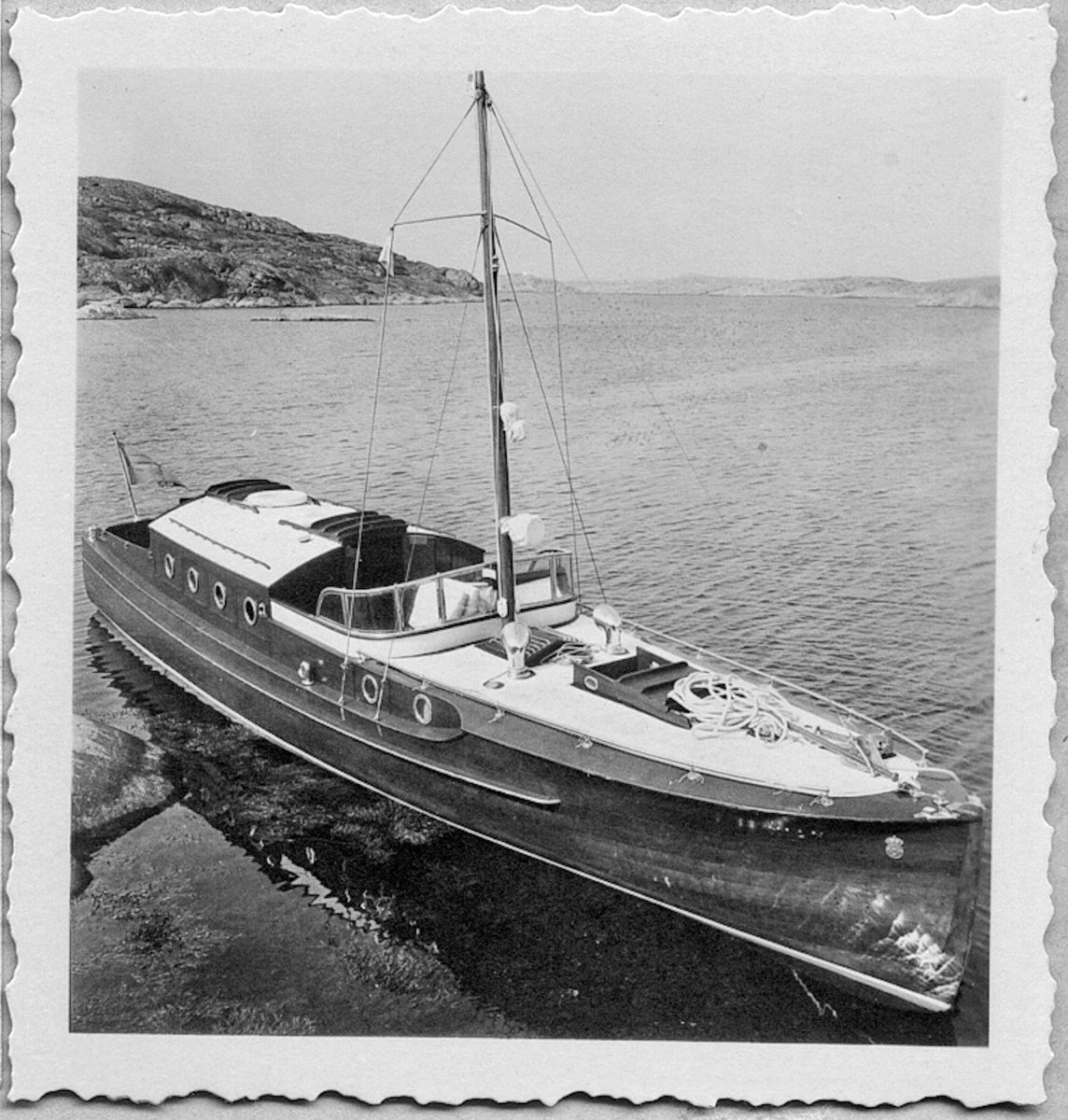
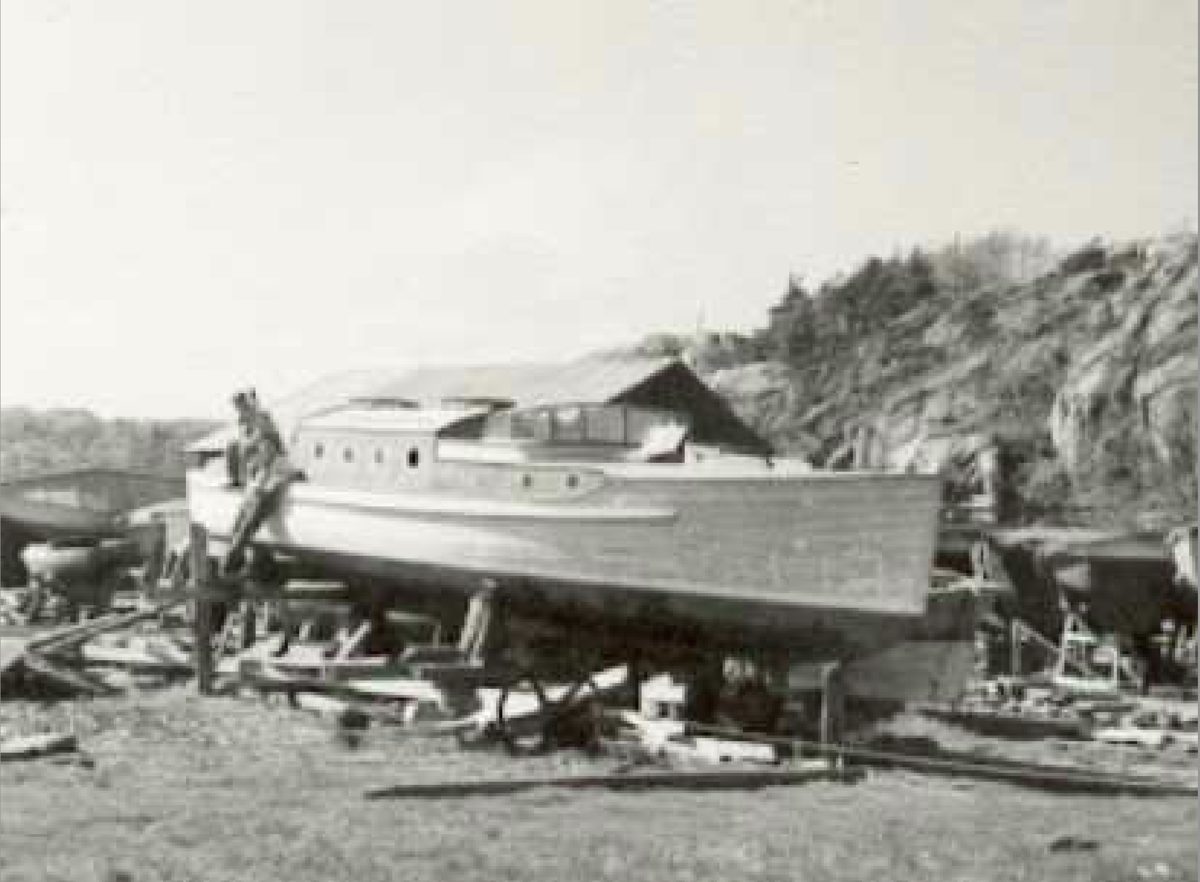
M/Y IAN was built in 1928 at Ängholmen shipyard in Långedrag to drawings by C.G. Pettersson. In the spring of 1929 she was featured in the press, which gives an unusually clear picture of how she was presented when new.
The National Maritime Museum's records describe her as a carvel-built motor cruiser in mahogany, designed by C.G. Pettersson, built at Ängholmen shipyard and fitted with an original 150 hp Sterling engine. The museum gives her length as 12.25 metres and beam as 2.40 metres. She was not built as a production boat, but to a bespoke design for a private client.
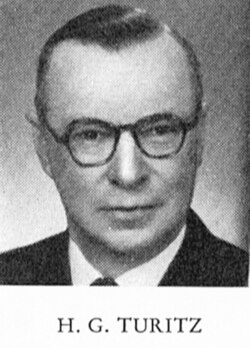
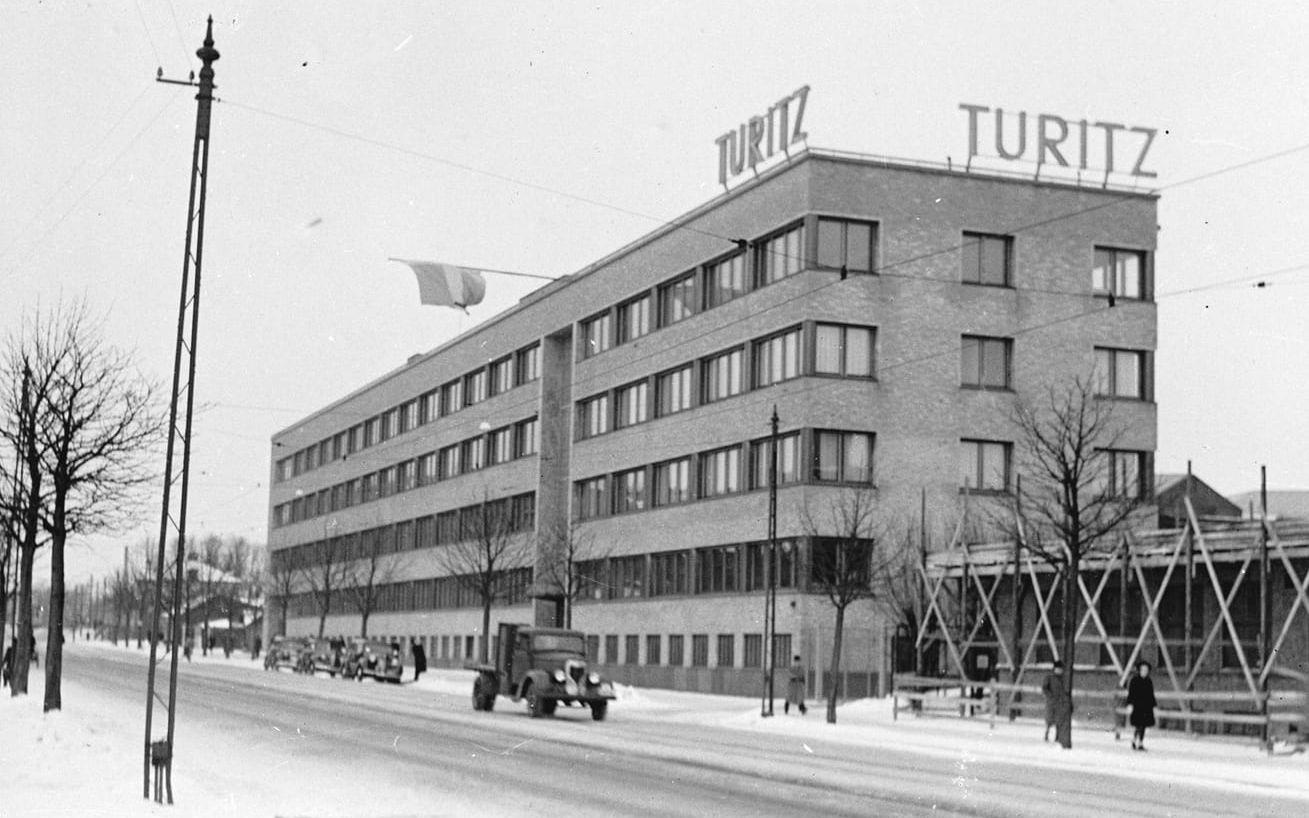
H.G. Turitz
The client was Herman Gustaf Turitz, born in 1884 and one of Gothenburg's most significant businessmen in the first half of the 20th century. He built up AB Turitz & Co and later became one of the figures behind the EPA department stores, founded in 1930 by Josef Sachs and Herman Gustaf Turitz.
Turitz was not only a businessman. He was active in Gothenburg's Jewish community life, among other roles as chairman of the Jewish Congregation of Gothenburg from 1929 to 1938, and he helped Jewish refugees escape Nazi persecution. When he had IAN built, his standing in business was strong. A large private mahogany yacht designed by C.G. Pettersson was therefore no random commission.
IAN was drawn for such a life. She had a saloon, galley, heads, berths and a powerful engine installation, built for longer journeys rather than just short day trips. Contemporary press reports of nearly 20 knots on trials show that she was also fast for her time.
The name IAN
The name IAN comes from the Turitz family. Herman Turitz named the boat after his daughter Gunilla Brändström, known within the family as Ian. It is an important detail, since the name is easily taken for an English man's name. Here it was instead a family pet name.
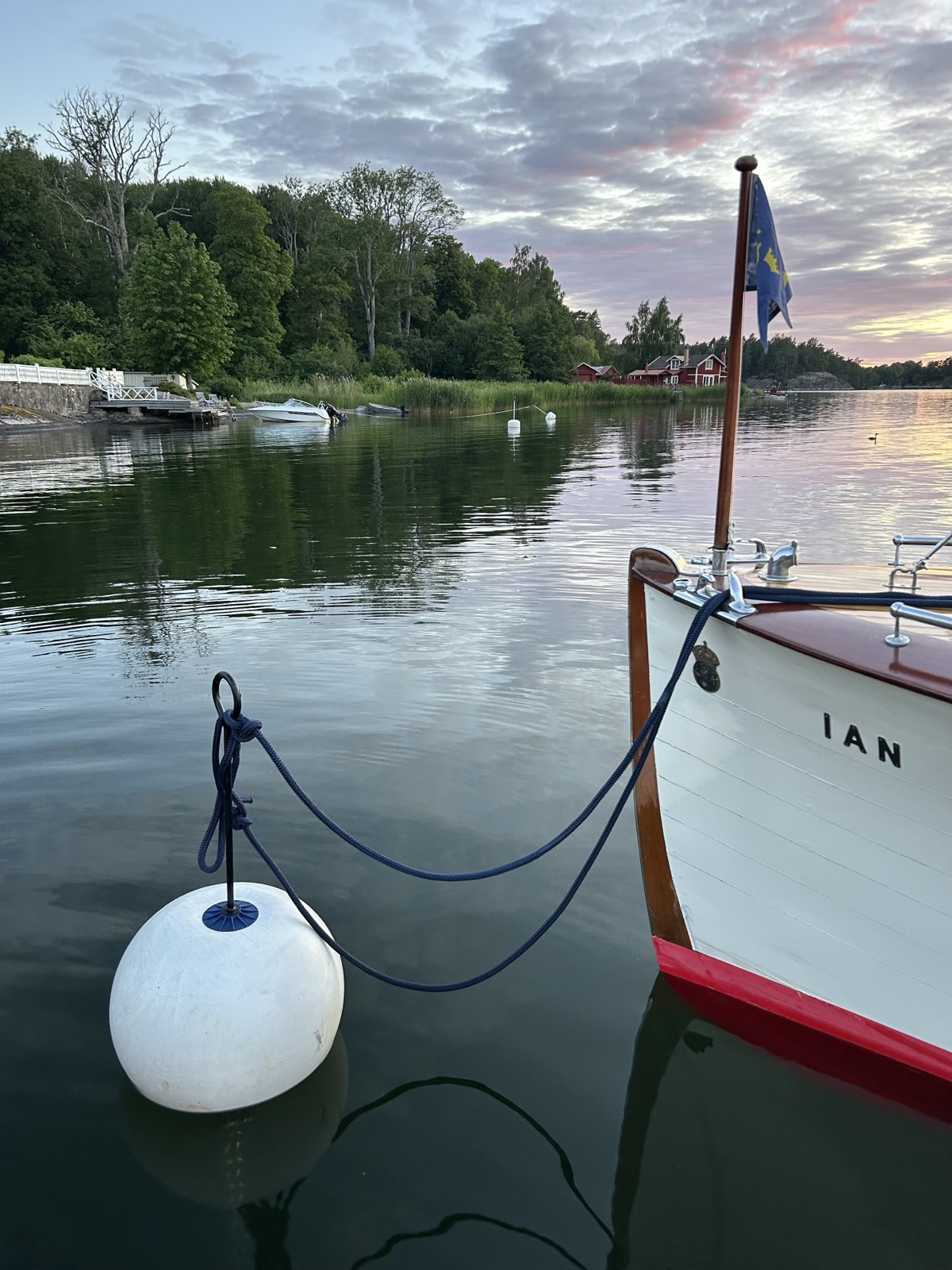
Over her life she has carried several names. The museum lists Ian, Mian, Tullan and Soraya. That she is once again named IAN means the original name has been restored. The Turitz family kept a strong connection to boating: son Claes Turitz became a distinguished sailor, competed for Sweden in the 5.5 Metre class at the 1960 Rome Olympics, and, according to the family, continued to use the name IAN on his own boats.
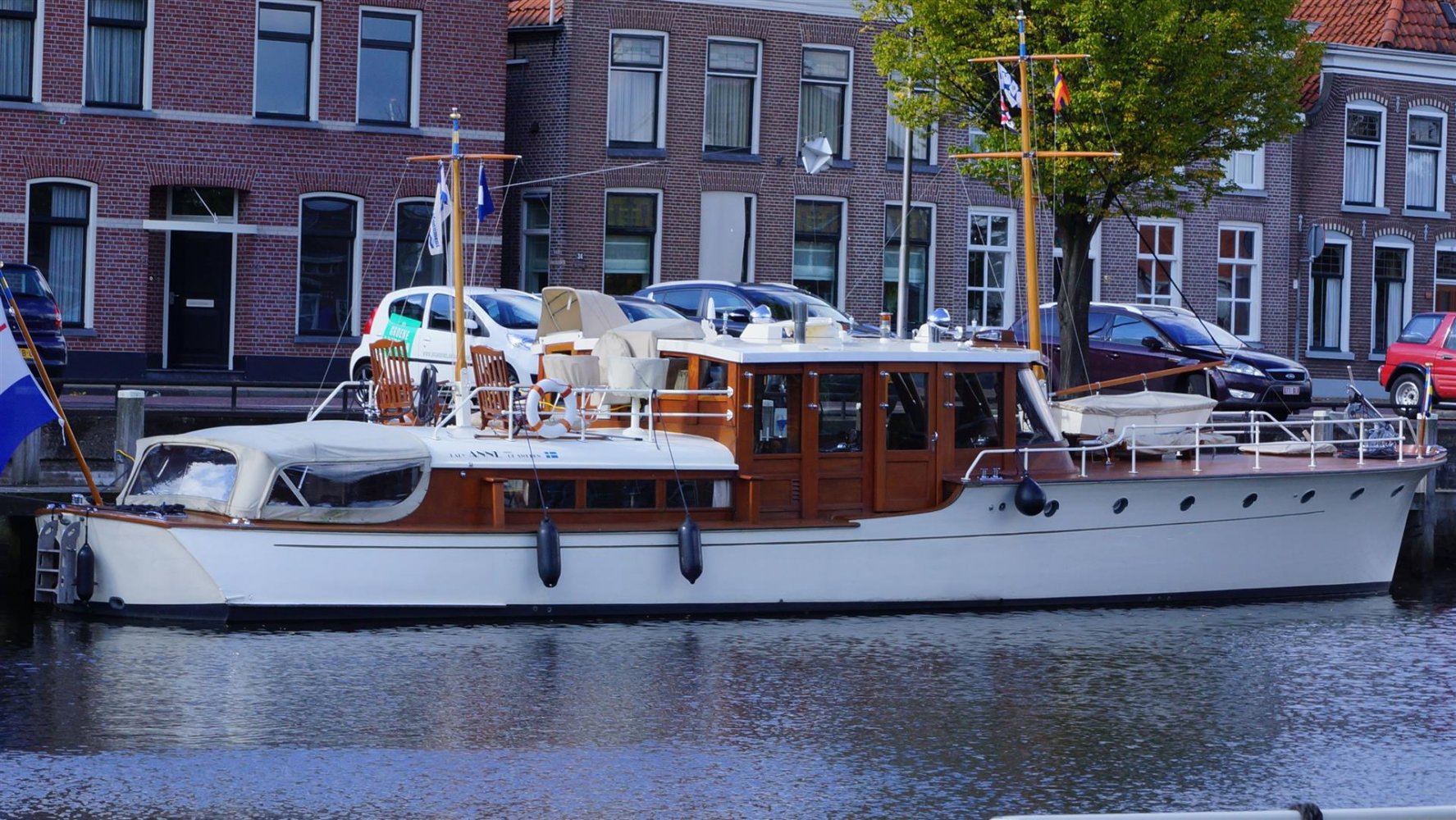
The name Ian recurred across several of Turitz's boats. One of them was a larger motor yacht, designed by Rich. G. Furuholmen and built at Hjalmar Johanssons varv in Långedrag, not to be confused with our Pettersson-designed IAN. She sails today as Lady Anne of Sweden.
From IAN to MIAN
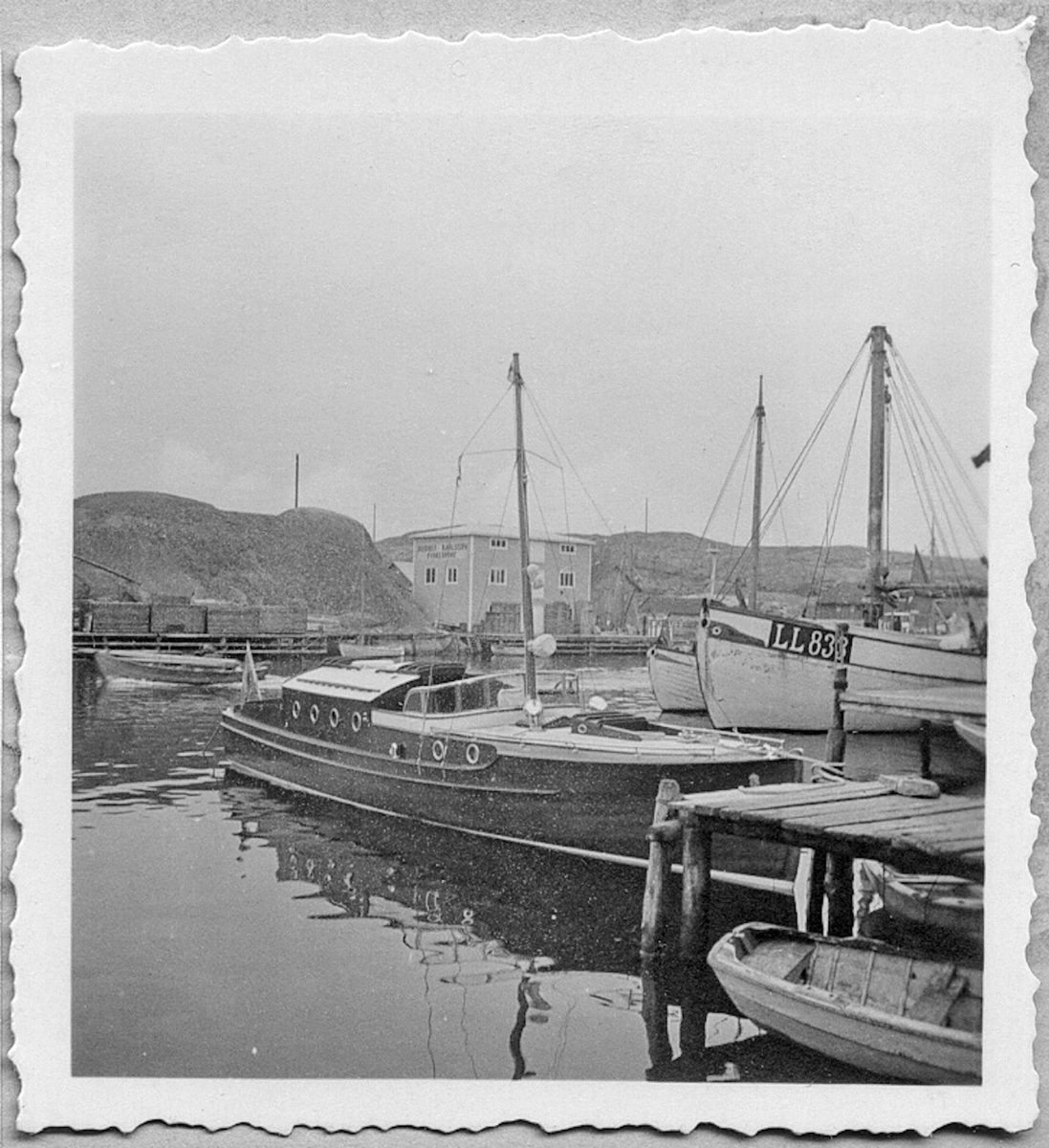
After Turitz the boat was owned by the shirt manufacturer Folke Elliott, and was then named MIAN. The record survives in local history material from Kössö. Ulf Kewenter, who worked for the Elliott family, ran MIAN between Kössö and Långedrag: in the morning the boat could take Folke Elliott to the mainland, and in the afternoon bring him back.
This is an important part of the story. Many larger motor yachts from the 1920s are described through drawings, engines and owners. Here there is also a picture of how the boat was actually used: as transport, an everyday working boat and a family boat in Gothenburg's southern archipelago.
Kössö and the west coast
IAN's early life belongs to the west coast. She was built in Långedrag, at the entrance to Gothenburg's southern archipelago, and under Turitz and Elliott her main setting was the same coastal landscape. The museum notes she was connected to west Swedish waters around Gothenburg until the mid-1950s, before moving on via Västmanland to Uppsala and Stockholm.
Engines over the years
IAN's engine history mirrors the technical development of the Swedish motorboat. The original engine was a 150 hp Sterling, while surviving original drawings show an alternative with a six-cylinder Scania-Vabis diesel of 130 hp. For a time the boat had a 90 hp Penta-Hesselman. Today she is fitted with a 200 hp Volvo Penta TAMD 41.
This is normal for a boat of her age. A nearly hundred-year-old motor yacht still in use is rarely technically unchanged. What matters is whether the changes have been made with respect for the boat's construction, function and cultural-historical value.
The restoration under Gunnar Härne
One of the most important periods in IAN's modern history is Gunnar Härne's ownership. He owned the boat for around three decades and carried out an extensive restoration. Photographs from the work show that the deck was lifted, the structure exposed and a new teak deck laid. The museum notes that major refits had earlier been done, including new fore-, aft- and covering decks, new bottom planking and a new keel in the 1980s.
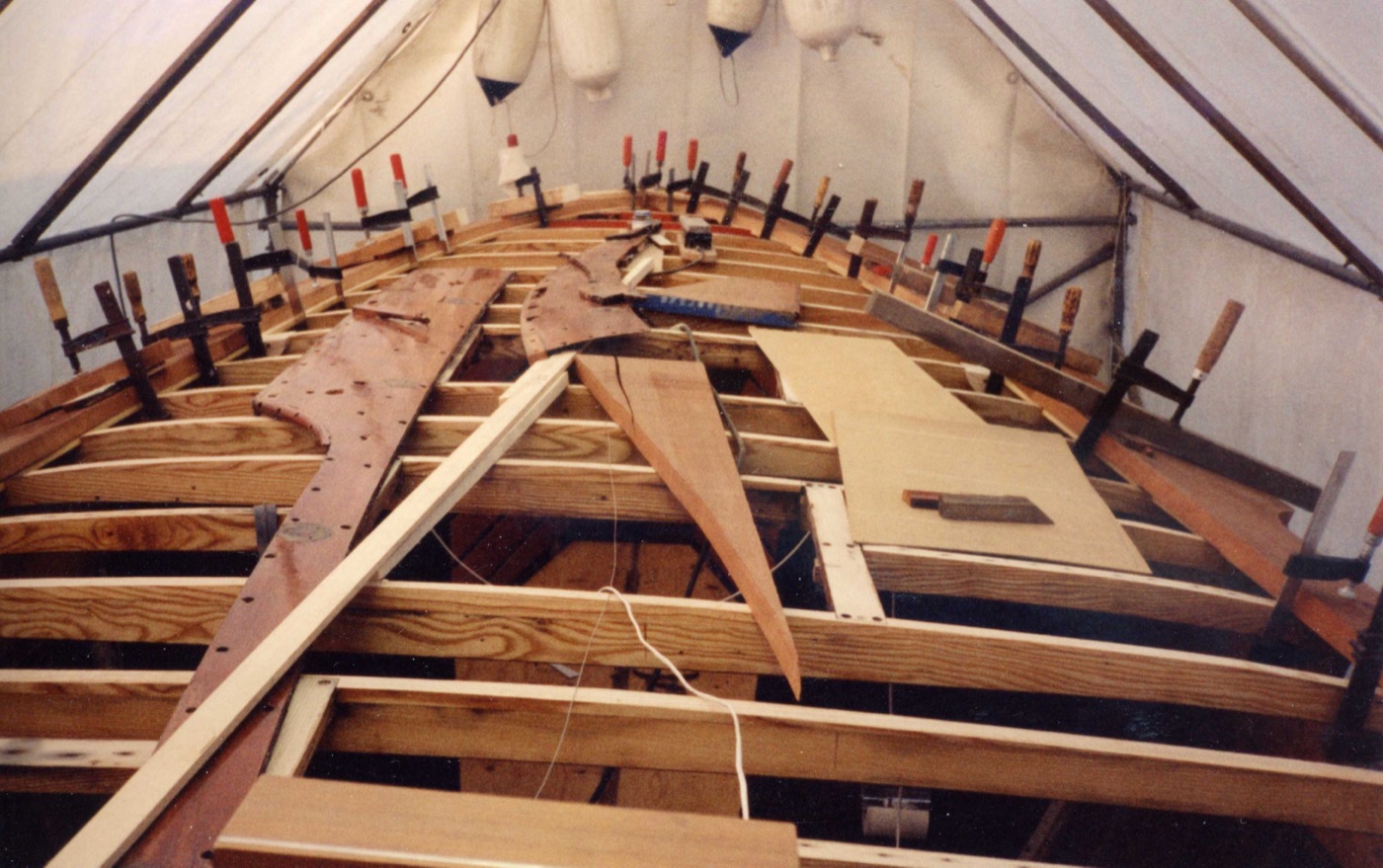
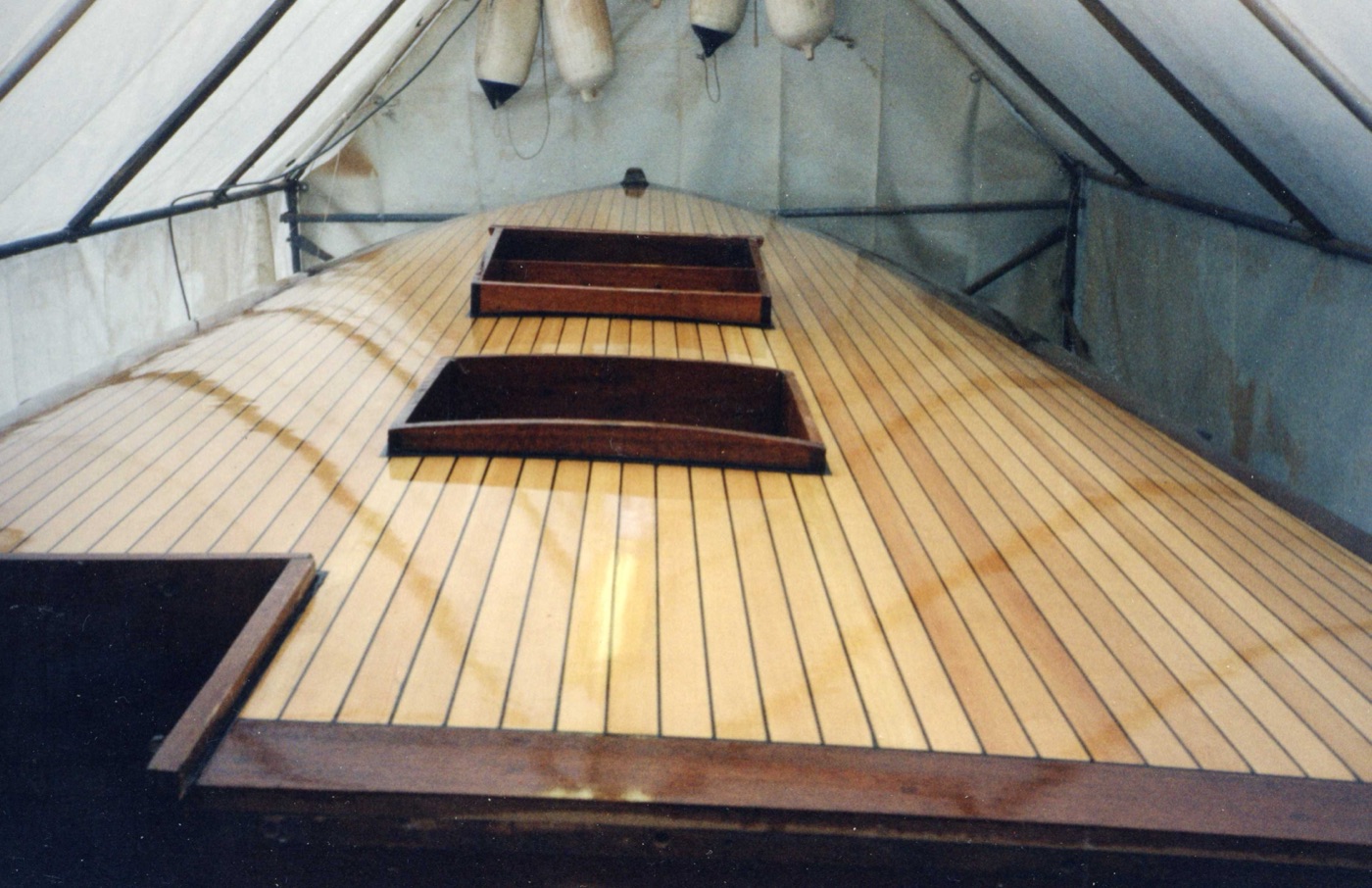
Many boats from the 1920s have been lost because a major refit finally became too much. IAN survived because owners took responsibility when large work was required. Härne's restoration is therefore a central part of the boat's preservation history.
The heritage listing
In 2025 IAN was heritage-listed by the National Maritime Museum. The listing is not legal protection, but a cultural-historical appraisal and a recognition of the boat's significance as part of the floating heritage. It is voluntary and is meant to encourage careful use of older boats.
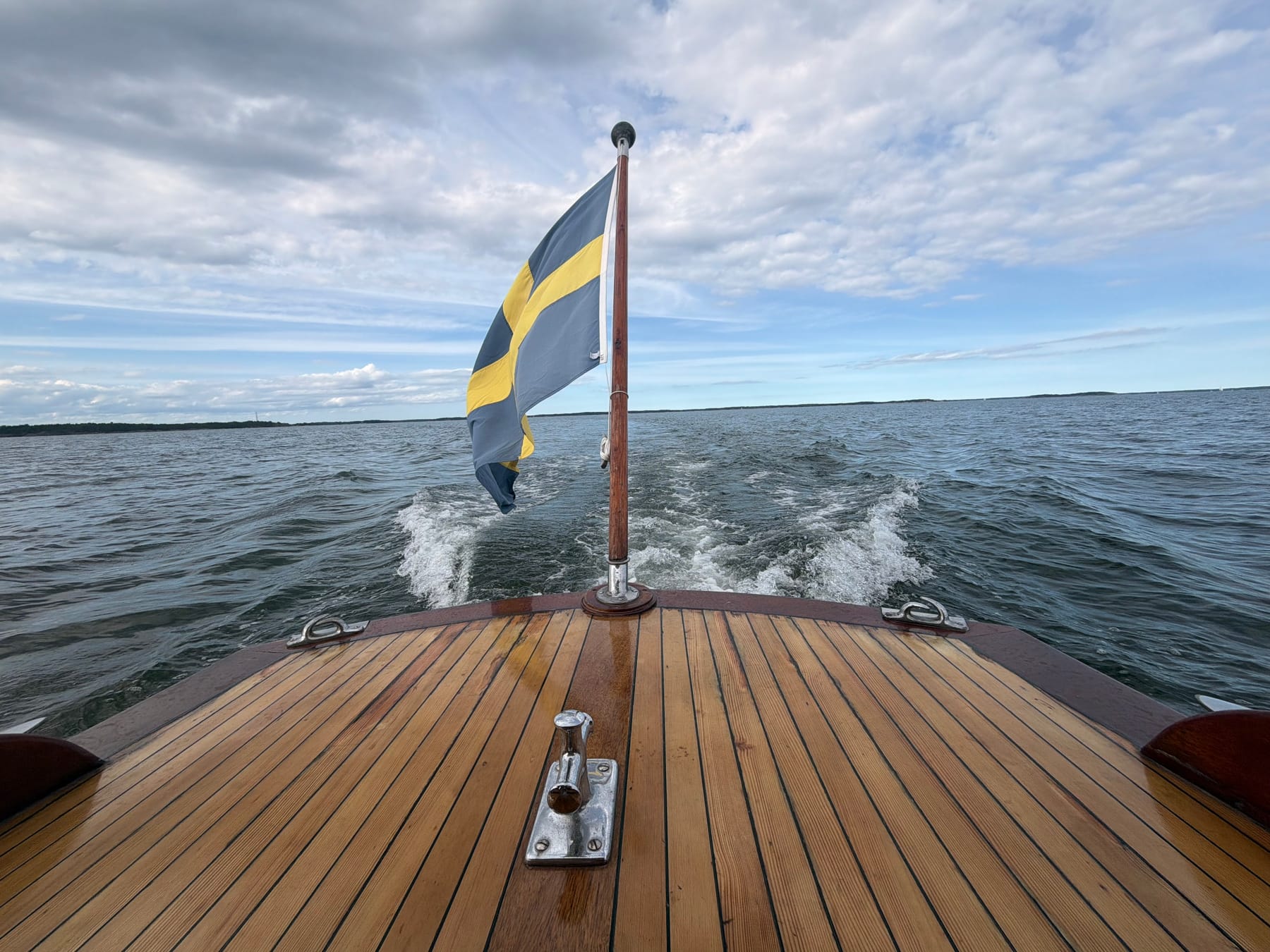
For IAN this means she need not be understood as a museum object. She is heritage in use. Her value lies in the design, the history and the fact that she is still used in the way she was built for.
A tended inheritance
IAN's history consists of several layers: C.G. Pettersson's drawing and the craftsmanship of Ängholmen shipyard, H.G. Turitz's commission and the early west-coast setting, Folke Elliott and MIAN at Kössö, and thereafter later names, moves, engine changes, restorations and owners who kept the boat alive.
This is how a wooden boat survives. Not by staying unchanged, but by changing carefully. A plank can be replaced, a deck relaid, an engine renewed. But the lines, the proportions and the use must continue to hang together with the boat's origin. It is the unbroken chain of design, use, maintenance and documentation that makes IAN more than a beautiful motorboat.